Mitigate AI-powered fraud with advanced identity verification for digital agreements
- AI-generated faces, voices, identities, and documents are making impersonation faster and more scalable.
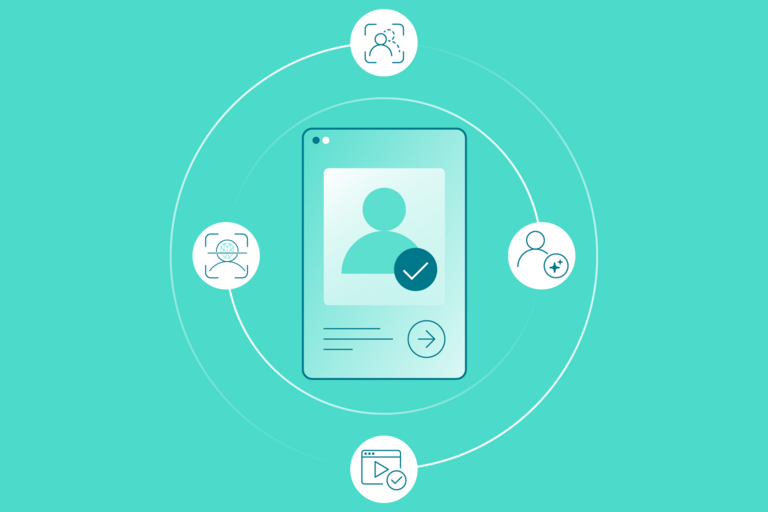
- Modern identity verification combines three layers – document verification, biometric matching, and video liveness detection – to identify signs of fraud, includingAI-generated fraud.
- These provide stronger assurance that a real person is present, not a deepfake.
- Modern identity verification capabilities can help financial institutions reduce the risk of fraudsters securing loans, credit cards, and other financial products.
How AI-powered fraud is changing identity risk
Today, the biggest risk to your onboarding process isn’t a hacker in a hoodie. It’s AI-powered fraud and it shows up as a synthetic identity. A synthetic face that is generated in seconds is now convincing enough to fool a trained loan officer on a live video call.
Fraudsters no longer need to steal an identity; they can manufacture a fake identity, complete with a matching voice and a “live” feed.
The FBI’s Internet Crime Complaint Center broke out AI-powered fraud as its own category for the first time in 2025, logging $893 million in audited losses across more than 22,300 complaints. Those figures reflect only the incidents reported to the FBI.
Deepfakes, meanwhile, have gone from novelty to normal business risk. Deloitte's Center for Financial Services flags synthetic identity fraud as the fastest-growing financial crime in the US, projecting at least $23 billion in losses by 2030 — fabricated identities built from stolen and invented data that are convincing enough to pass onboarding checks.
Separately, Pindrop’s analysis of its own 2025 fraud data found AI-powered fraud attempts surged 1,210% over the course of the year. This far outpaces the 195% rise in traditional fraud over the same period.
What is the takeaway for financial institutions, insurers, and any business completing digital agreements? The old identity verification playbook (a quick document scan and a selfie) was written for a fraud landscape that no longer exists.
Why AI & identity verification have a critical role in the agreement workflow
Digital identity verification is a critical checkpoint in any online financial interaction. Whether it’s used to support digital account openings, user onboarding, loan applications, financing, insurance claims, or digital agreement processes, it allows financial institutions to verify identities in real time to better detect financial identity fraud before a higher-risk contract is signed.
How does modern digital identity verification work?
Modern identity verification helps detect AI-powered fraud by combining document authenticity checks, biometric face matching, and video liveness detection. These layers assess whether an identity document is genuine, whether the person matches the document, and whether a real person is physically present rather than a photo, replay, mask, or deepfake.
Modern identity verification combines three layers of defense:
- Document verification
- Biometric matching
- Video liveness detection
These solutions use AI algorithms to validate the authenticity of an ID document, such as a passport or driver’s license. They then cross-reference it against a selfie of the end-user through biometric face matching.
AI in identity verification supports document analysis, data extraction, biometric comparison, and fraud-signal detection. These capabilities can help identify altered documents, compare a selfie with the identity document portrait, and evaluate biometric and liveness signals for indicators of spoofing or manipulation. This approach supports AI-powered fraud detection during identity verification by evaluating document, biometric, and liveness signals before a higher-risk agreement is completed.
Liveness detection is where technology has evolved most. Early approaches simply captured a photo and prompted the user to smile or blink.
Many verification tools still stop there, analyzing a single selfie image.
OneSpan Sign goes much further with a modern approach to liveness detection. It records the entire interaction as video, analyzing the person as they naturally behave in front of the camera through passive checks like skin texture, light reflection, micro-movements, and 3D facial mapping. It then adds an active, real-time challenge that changes with every session.
Capturing the full interaction provides stronger assurance that a real, physically present person is behind the camera – not a photo, mask, screen replay, or deepfake.
This process is convenient for financial institutions looking to reduce the risk of fraudsters securing loans, credit cards, BNPL (buy-now-pay-later) products, or other financial resources.
The consumer experience is just as easy. Verification happens in real time. It’s embedded directly inside the digital agreement workflow, so identity verification, consent, and signing happen as one connected journey instead of three disconnected steps.
Benefits of modern identity verification
- Customer acquisition: Enables secure digital account opening and supports growth through online channels.
- Stronger fraud mitigation: Modern identity verification uses biometric matching combined with active and passive video liveness detection. Together, these improve detection of screen replays, masks, and AI-generated deepfakes.
- Compliance: Many industries require identity verification to meet regulatory obligations. A single audit trail capturing verification, consent, and signing evidence together simplifies compliance reporting and audits.
- Lower abandonment: A streamlined onboarding process improves the experience and helps reduce abandonment rates.
- Improved customer experience: No need for in-person visits or manual processes.
Best practices for implementing identity verification
There's no single right way to verify identity. The optimal solution, along with the processes that support it, should align with an organization's risk appetite, regulatory obligations, and business objectives.
Financial institutions must comply with customer identification and anti-money laundering (AML) requirements that vary across jurisdictions. These obligations are governed by regulatory bodies and frameworks such as FINTRAC in Canada and evolving European initiatives, including eIDAS 2.0.
The most effective identity verification strategy takes into account not only regulatory requirements, but also factors such as transaction volume, customer risk profiles, industry-specific considerations, and the required level of assurance. By balancing these, organizations can deliver secure, compliant, and user-friendly customer experiences.
The organizations that succeed treat identity verification as a program spanning their people, processes, and technology. They design it to keep pace with a threat landscape that shifts monthly, not yearly.
- Know your audience. In today's global economy, customers can present a wide range of identity documents, many issued in other countries. To build an effective identity verification process, understand the types of documents your customers are likely to use, as well as the geographic and demographic makeup of your customer base.
- Even in-person verification can fail to detect sophisticated counterfeit documents if your employees are unfamiliar with the security features of IDs issued in other countries. Choosing a solution with broad global coverage helps reduce this risk.
For example, OneSpan Sign supports more than 10,000 identity document types across 193 countries and territories. The platform continually expands its coverage of accepted government-issued IDs, helping you maintain secure, compliant, and seamless identity verification experiences. Educate customers and employees continuously. Customers have different levels of exposure to fraud. Clear guidance on spotting phishing scams or suspicious activity empowers them to act proactively.
Well-informed employees matter just as much. Make sure your team understands how today’s fraudsters operate, from GenAI-forged documents to real-time deepfake video calls.
Let AI fight AI. The same generative technology that fraudsters exploit can be turned against them.
- Let AI fight AI. The same generative technology that fraudsters exploit can be turned against them. AI algorithms should validate document authenticity, extract data, and cross-check data (including name matching), power biometric comparison and liveness detection. Evaluate your processes and systems regularly, so you're ready to address emerging threats as they appear.
Match assurance to risk. Not every transaction needs the same rigor. Opening a high-value account or approving a large loan warrants full AI-powered document checks and video liveness verification. In contrast, a returning customer whose identity has already been verified may simply authenticate with a FIDO passkey to benefit from a simpler user experience without reducing the assurance level.
Look for the ability to step assurance up or down by transaction, segment, use case or channel. This risk-based approach strengthens security where it matters without adding time-consuming steps in the user journey everywhere else. Requiring every customer to complete the most rigorous checks is how you lose legitimate users.
- Keep the evidence. For regulated agreements, verifying identity isn't the finish line – it’s proving you did it. Capture verification, consent, and signature together in a single, tamper-evident audit trail tied to the sealed, signed contract. When a regulator, auditor, or court asks how you know who signed, that connected evidence is the difference between a confident answer and a scramble.
Building identity verification into the digital agreements
As identity fraud becomes more sophisticated, many organizations are rethinking identity verification. Rather than treating it as a standalone checkpoint, they are making it part of the broader digital agreement journey.
OneSpan Sign brings identity verification and eSignature into a connected workflow. Its AI-powered document analysis, biometric face matching, and certified active and passive video liveness detection assess participants before an agreement is completed. Verification evidence remains connected to the consent and signing record, supporting a more coherent audit process.
Future-ready identity verification to defend against AI-powered fraud
The future of identity verification will not be defined by choosing between security and customer experience. It will be defined by applying the appropriate level of assurance at the right moment.
Organizations that connect document verification, biometric matching, video liveness detection, consent, and signing build stronger defenses against impersonation and AI-generated fraud. They also reduce unnecessary fragmentation across the customer journey.

See the demo
Watch the webinar to see how AI-powered identity verification and video liveness detection protect digital agreements without adding unnecessary friction.
Register nowFrequently asked questions
What is AI-powered fraud?
AI-powered fraud is the use of artificial intelligence to create, automate, or scale deceptive activity. In digital agreement workflows that involve identity verification, it may involve fake documents, synthetic identities, generated faces, cloned voices, deepfakes, or manipulated video.
How does AI identity verification work?
AI identity verification combines identity document checks, biometric face matching, and liveness detection. These layers assess whether the document is genuine, whether the person matches its portrait, and whether a real person is present during verification.
What is synthetic identity fraud?
Synthetic identity fraud involves creating an identity from a combination of real and fabricated information. AI can make the identity more convincing by generating supporting documents, facial images, voices, or video.
Can identity verification detect a fake identity?
Identity verification can help identify indicators of a fake identity by analyzing document authenticity, identity data, biometric similarity, and liveness signals. A layered process provides stronger assurance than a document scan or static selfie alone.
How are deepfakes used in identity verification fraud?
Deepfakes can imitate a person’s face, voice, or movements in an attempt to bypass remote identity checks. Video liveness detection helps evaluate whether the person is physically present rather than represented by manipulated or replayed media.
What is video liveness detection?
Video liveness detection analyzes a video interaction to help determine whether a real person is present. It can evaluate real-time movement and biometric signals for indicators of photographs, masks, screen replays, prerecorded video, and deepfakes.
How can organizations balance fraud protection and customer experience?
Organizations can apply stronger identity verification to higher-value transactions while using lower-friction authentication for lower-risk interactions.
