FINTRAC’s identity verification guidance is a timely step forward—but compliance will require legwork
As FINTRAC rolls out an extension of its anti-money laundering and anti-terrorist financing requirements under the Proceeds of Crime (Money Laundering) and Terrorist Financing Act (PCMLTFA), it is bringing additional industries under its oversight.
With new requirements to verify the identity of persons and entities for specific activities and transactions, including online transactions, Canadians should feel confident that their best interests are at the forefront.
Identity theft schemes and the proliferation of AI-driven deepfakes have preyed on the fast pace of digital transformation, exploiting it to defraud individuals and companies alike. The additional identity verification (IDV) requirements will contribute to safer financial digital services.
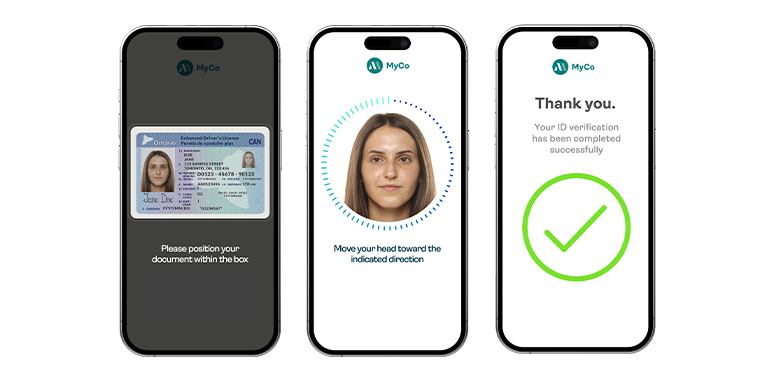
If a person isn’t physically present, institutions can rely on government-issued photo identification, but they must have a process to confirm the document’s authenticity. For instance, when opening a new account remotely, a bank might use technology to analyze an ID document to verify its authenticity.
Canada is hardly the only country to bring advanced identity verification technologies as part of their user identification guidance. As account opening and transactions move online and as adoption of digital wallets and virtual currencies gains traction, governments worldwide are strengthening identity verification requirements to combat identity fraud and money laundering.
These rules aren’t new for Canadians, either, but the most recent FINTRAC action extends their requirements. Now, financing and leasing entities and title insurers must verify identities for high-value transactions, such as passenger vehicle leasing and property deals, thereby placing an additional onus on potential fraudsters.
These high-value transactions are where fraud tends to occur, but the law also accounts for more minor crimes by triggering the IDV process for any suspicious transaction, regardless of amount.
These new focus areas are especially noteworthy as FINTRAC extends oversight further along the transaction journey, beyond financial entities such as traditional banks, credit unions, and mortgage lenders.
It’s an acknowledgement that fraud can happen anywhere, and an extra safeguard that brings strong protections.
Compliance may feel complex in practice. Title insurers and financing and leasing entities need to ensure full compliance, which can be achieved by incorporating different identity verification methods.
For them and for all the other entities reporting to FINTRAC, the choice isn’t just about compliance—it’s about how that compliance impacts customers and work processes. Organizations typically face two approaches: “FINTRAC-ready” (selecting a compliant verification method) and “FINTRAC-optimized” (selecting a compliant method that is also faster, more secure, and user-friendly).
This choice matters because any friction, whether in speed, privacy, or ease of use, can push customers to competitors. End users expect both security and convenience, and financial institutions need technology that delivers both.
AI plays a dual role here: while it drives new fraud threats like deepfakes, it also powers advanced IDV solutions to detect them.
Biometric verification leans on a bevy of AI algorithms to quickly compare photographs of faces and ID documents, uncovering inconsistencies and improprieties. AI algorithms are also used to extract and read data from ID documents and validate authenticity.
Institutions must ensure identity verification checks are documented and shared securely with governing bodies when needed.
Vendors supporting them in verification efforts need to both collect and return these records to the financial institutions securely. However, this naturally raises privacy concerns and requires financial institutions to be diligent in selecting verification partners that protect and encrypt their personal data.
Aiming for mere compliance risks slows processes that check the required boxes, but don’t go above and beyond for customers who can find a great experience elsewhere. There’s a duty to both keep transactions safe and operate efficiently on the cutting edge.
Deploying automation intentionally on the backend can be a real boon for customer experience, scalability, abandonment rates, and broader operations. With algorithms meant to detect deepfakes, forged documents and other threats, financial institutions can ensure that legitimate transactions flow smoothly, while identity fraud attempts are stopped.
Post compliance challenges will look different for every bank, insurer, and leasing entity, as each has unique pain points that require smoothing over. For some, it’s slow onboarding. For others, high-value transactions may hit snags in the process. For US and other international financial organizations operating in Canada, the FINTRAC requirements apply as well. They will need to make sure they are compliant on time.
In the year ahead, compliance with FINTRAC’s identity verification requirements will be non-negotiable for Canadian financial institutions to guarantee customer satisfaction. Implementing the right verification technology to thrive under these new rules will require legwork from financial entities, compliance should be seen as an example to clear for customers’ sakes, not just a benchmark to strive for.
The hard work of choosing partners that will go above and beyond to balance IDV compliance with seamless customer experience needs to start now. Financial institutions can’t quite control how FINTRAC regulates them, but they can differentiate themselves by keeping customer satisfaction central to their compliance strategies.
Blog
FINTRAC: Preparing your identity verification strategy
Discover how to turn FINTRAC compliance requirements into a competitive advantage.
Learn moreSource: This article was originally published on Fintech.ca on December 22, 2025. Reprinted with permission.
The information contained on this page is for information purposes only, provided as is as of the date of publication, and should not be relied upon as legal advice or to determine how the law applies to your business or organization. It is recommended that you seek guidance from your legal counsel with regard to law applying specifically to your business or organization and how to ensure compliance. OneSpan does not accept liability for the contents of these materials or for third parties. For official guidance, visit fintrac-canafe.gc.ca.
